StudyMarkets · Local AI
Real setups
Machines people actually built to run LLMs at home — the hardware they used, what it draws from the wall, and the tokens per second. Photos and numbers, not theory.
Curated: every entry is checked before it goes up. Measured numbers are labelled as measured; estimates are labelled as estimates. The two are never mixed.
Bial — three machines, 84 GB of VRAM
Brazil · Ubuntu · running models for experimentation and as a fallback for his own AI products. In his words: "I don't want to depend on anyone else's API."
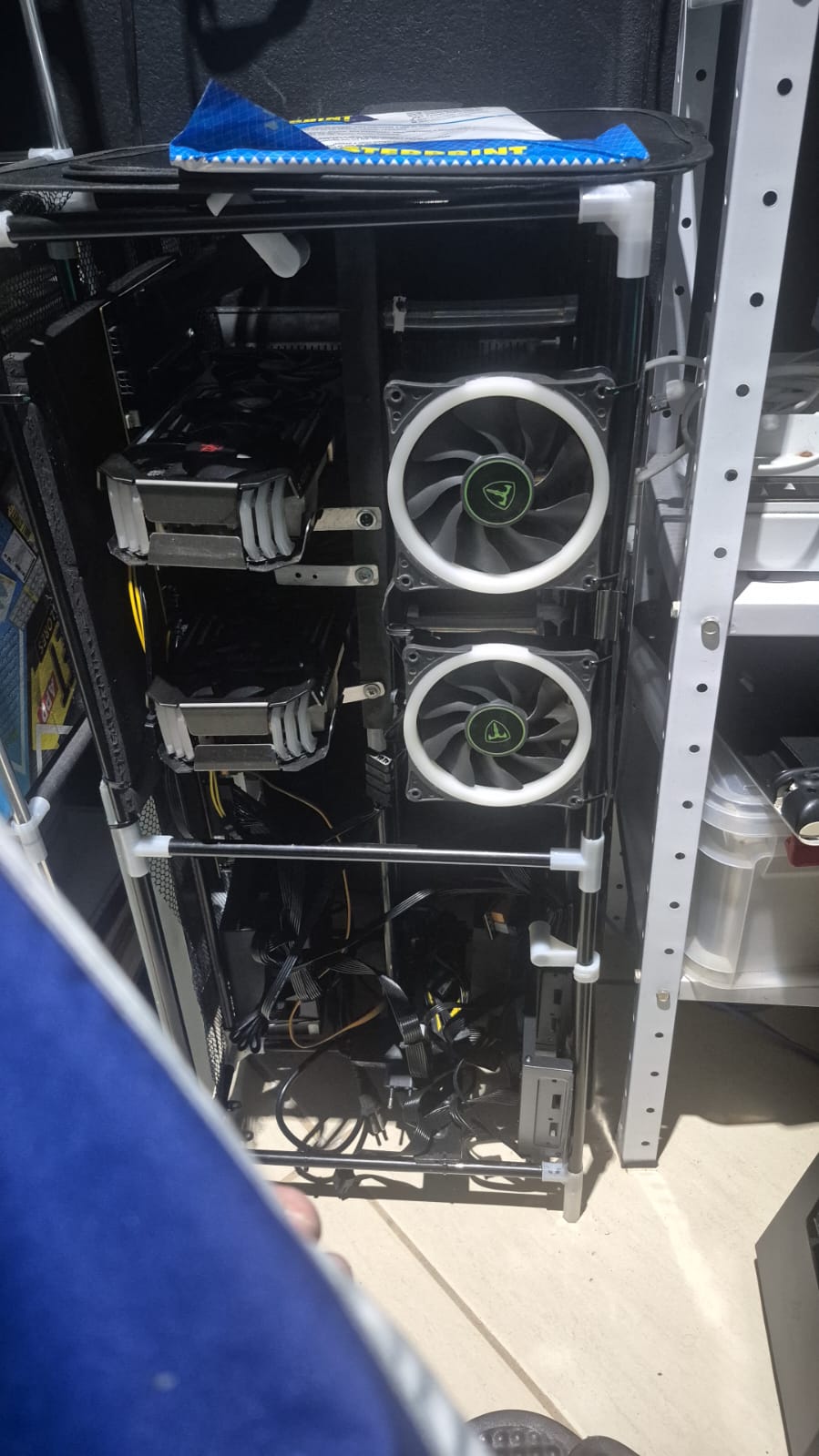
Machine 1 — dual Xeon
3× RTX 3060 12 GB · dual Xeon · 64 GB system RAM · Ubuntu
36 GB VRAM · 360 GB/s · ~660 W
| Model | Fits | tok/s est |
|---|---|---|
| 32B dense | yes | 13.9 |
| 27B dense | yes | 16.5 |
| MoE 30B-A3B | yes | 148.5 |
| 70B dense | no | — |
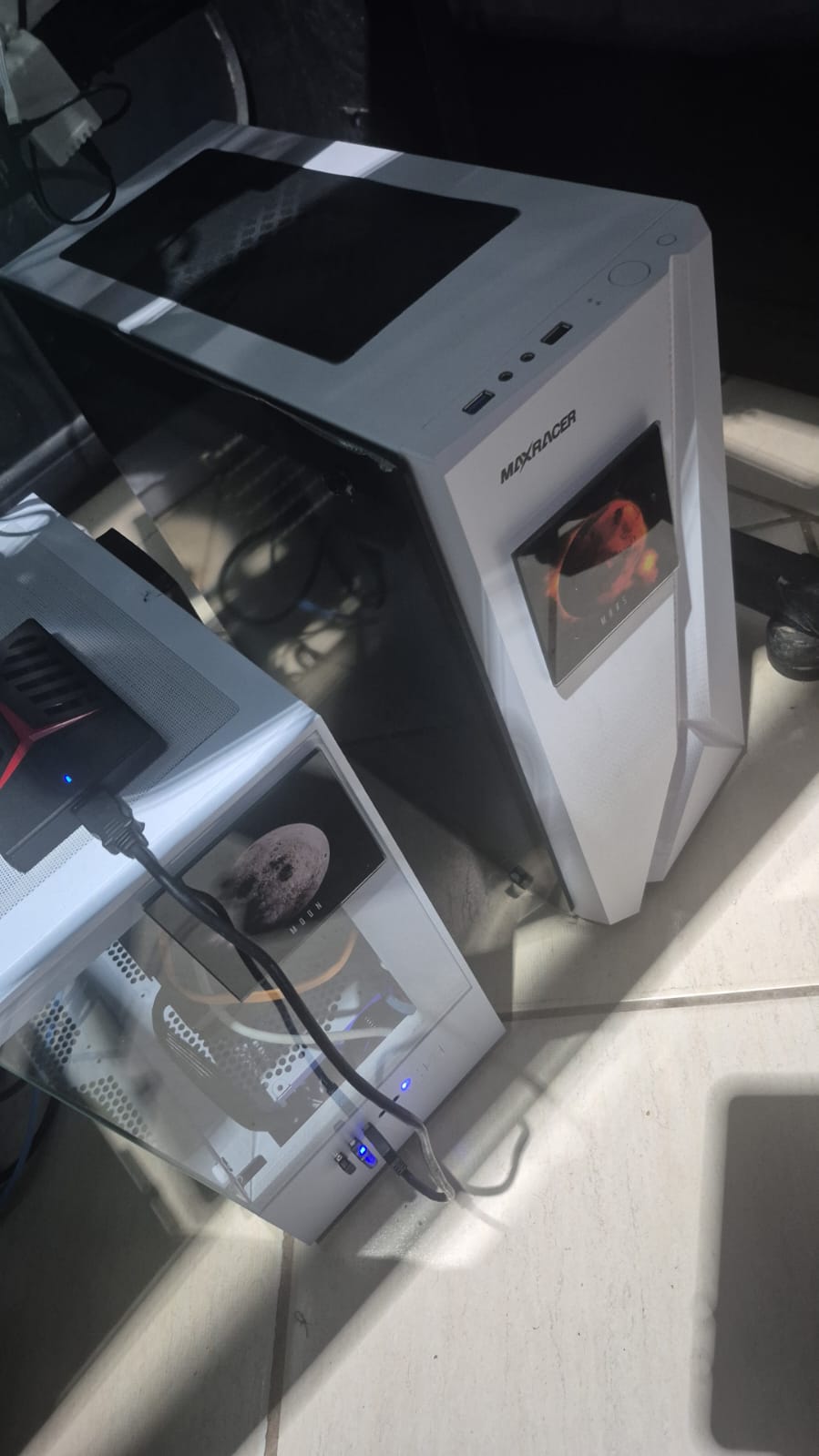
Machine 2 — the white one
4× RTX 3060 12 GB · Intel i5 · 16 GB system RAM
48 GB VRAM · 360 GB/s · ~830 W
| Model | Fits | tok/s est |
|---|---|---|
| 32B dense | yes | 13.9 |
| MoE 35B-A3B | yes | 148.5 |
| 70B dense | tight | 6.4 |
Note: 16 GB of system RAM for 48 GB of VRAM is tight. The model is staged through system memory before it reaches the cards, so loading takes longer than it needs to. Going to 32 GB should cut load time — it will not change speed afterwards.
Open this machine in the calculator →Machine 3 — AMD, still being built
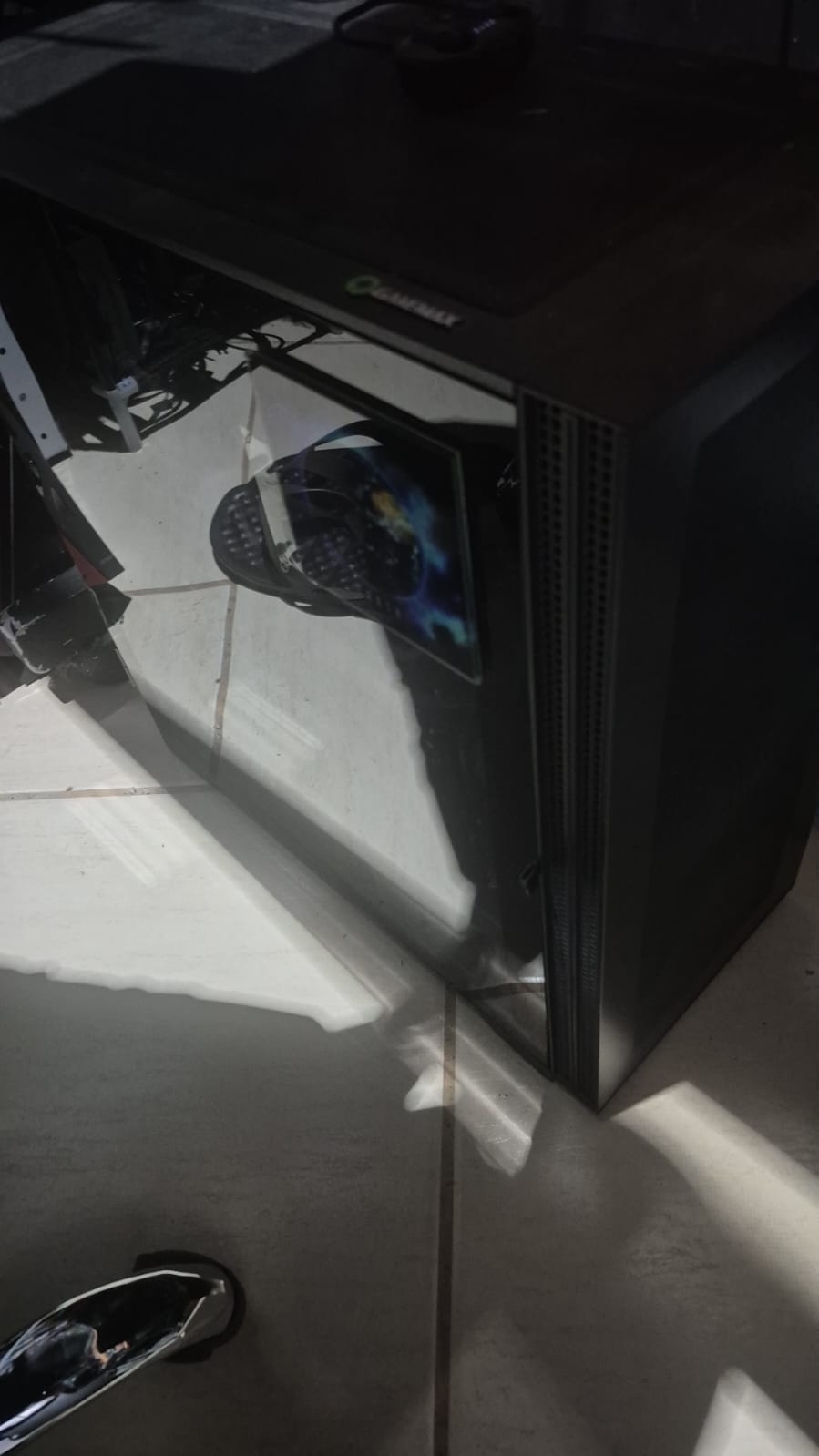
4× Radeon RX 6700 XT 12 GB (planned) · in assembly
48 GB VRAM · 384 GB/s · ~1070 W
| Model | Fits | tok/s est |
|---|---|---|
| 32B dense | yes | 14.8 |
| MoE 30B-A3B | yes | 158.4 |
| 70B dense | tight | 6.8 |
When this one runs, it will be the first AMD data on this site. Every measured number we have today comes from NVIDIA or Apple hardware.
If you have cards sitting idle, look for MoE models first.
Send your setup
Built something? Your numbers are worth more than any benchmark we can run.
Send these, and photos if you have them:
- Cards — model and how many
- Motherboard, CPU, system RAM, power supply
- OS and the program you use — llama.cpp, Ollama, LM Studio. This matters as much as the hardware: the same model on the same machine can differ 5× between them.
- The numbers — model, quantisation, context length and tokens per second
Where to find tok/s: llama.cpp prints it at the end of each generation
(eval time … tokens per second). Ollama: run with --verbose.
LM Studio shows it under the response.
Please don't estimate. If you haven't measured it, we would rather publish the build without a number than publish a wrong one. Separating measured from estimated is the whole reason this site is worth reading.
Multi-card builds and repurposed mining rigs are especially welcome — almost nobody publishes those numbers.